Sometimes, as a homeowner or property manager, you may want to rekey a lock after it starts failing or becomes unreliable without immediately calling a locksmith. Understanding the process gives you more control over your security decisions and helps you determine when a DIY approach makes sense or when professional help is the smarter move.
Rekeying a lock is one of the most cost-effective ways to improve home security without replacing the entire lock hardware.
In this guide, you’ll learn exactly what rekeying is, when to do it, and how to rekey a lock step by step.
So What Does It Mean to Rekey a Lock?
Rekeying a lock means adjusting the internal components of your existing lock so it works with a new key and blocks all old ones. Instead of replacing the entire lock, you’re simply changing how the lock recognizes a key. This is done by modifying the small pins inside the lock cylinder to match a different key cut.
For homeowners and property managers, rekeying is a practical way to regain control over who has access without the cost of a new lockset. It’s especially useful when keys are lost, shared, or no longer trusted.
This process:
- Keeps your existing lock hardware in place
- Prevents old keys from working
- Creates a new set of working keys for secure access.
It’s a simple upgrade that makes a big difference for your budget and in everyday security.

When Should You Rekey a Lock?
Now that you understand what rekeying is, the next question is when it actually makes sense to do it. In many cases, rekeying is a smart and proactive way to maintain control over your property’s security without making major changes.
You should consider rekeying if:
- You’ve recently moved into a new home or taken over a property
- A tenant, employee, or roommate no longer needs access
- Keys have been lost, stolen, or possibly copied
- You want to simplify access by using one key for multiple doors
For property managers, rekeying is often a standard step between tenant turnovers to keep access secure and consistent.
Tools & Materials You’ll Need
Before you begin rekeying, it’s important to have the right tools ready. Using the correct kit and working carefully will make the process much smoother and help you avoid mistakes.
You’ll need:
- Rekeying kit matched to your lock brand (try Kwikset or Schlage kits from Amazon or Home Depot)
- New keys (usually included in the kit)
- Plug follower tool
- Pinning tweezers
- Small screwdriver
- A clean, well-lit workspace
Using the correct rekey kit is essential, since each lock brand uses different pin sizes and configurations.
Step-by-Step: How to Rekey a Lock
Now that your tools are ready, you can move into the actual rekeying process. Work on a clean surface, keep the small pins organized, and move slowly through each step to avoid mixing components.
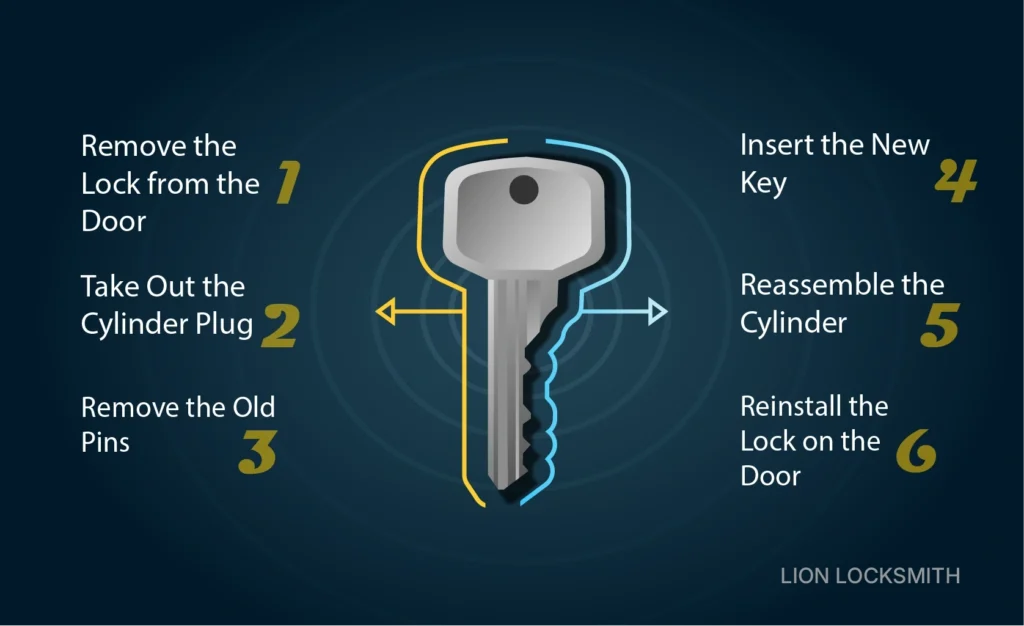
Step 1: Remove the Lock from the Door
Start by unscrewing the lock from the door and removing the cylinder carefully. This gives you clear access to the internal plug and pin chamber.
Step 2: Take Out the Cylinder Plug
Insert the current working key and turn it slightly. Use your plug follower to push the cylinder plug out smoothly while keeping the top pins and springs in position.
Step 3: Remove the Old Pins
With the plug separated, remove the old bottom pins from the plug. These pins are cut specifically to match the previous key.
Step 4: Insert the New Key
Place the new key into the plug. This positions the key cuts so you can match each chamber with the correct replacement pin.
Step 5: Install the New Pins
Using the pin chart included in your rekey kit, insert the correct pins one chamber at a time. Each pin must sit flush at the shear line when the key is inserted.
Step 6: Reassemble the Cylinder
Carefully slide the plug back into the cylinder with the follower tool supporting the upper chambers. This keeps the springs and driver pins aligned.
Step 7: Test the Lock
Before reinstalling, test the lock several times with the new key. It should turn smoothly without sticking or resistance.
Step 8: Reinstall the Lock
Once everything works correctly, reinstall the lock on the door and tighten all screws securely. Your lock is now successfully rekeyed.
Common Mistakes to Avoid When Rekeying a Lock
As you work through the rekeying process, a few small mistakes can prevent the lock from working properly. Staying organized and patient will help you get better results the first time.
Watch out for these common mistakes:
- Mixing up pin sizes during installation
- Using a rekey kit that does not match your lock brand
- Losing springs, pins, or small cylinder parts
- Forcing the plug back into place during reassembly
Always test the key before reinstalling the lock. A quick test helps you catch alignment issues early and avoid repeating the entire process.
DIY vs Professional Rekeying
At this point, you may be wondering whether rekeying the lock yourself is the best move. For many standard residential locks, a DIY approach works well if you have the right kit, patience, and a steady hand.
However, professional help is often the better choice when dealing with multiple doors, worn lock cylinders, commercial hardware, or high-security systems. An experienced locksmith can quickly spot hidden issues like damaged pins, weak springs, or alignment problems that may cause the lock to fail later.
If you’re unsure, calling a locksmith can save time, frustration, and costly mistakes.
Trust Lion Locksmith for affordable, expert mobile lock rekey services across Maryland. With 15+ years of hands-on experience and 25,000+ locks successfully rekeyed, we deliver fast, professional service that restores security and peace of mind. Call us today for your expert lock rekey services
Final Thoughts: Is Rekeying Right for You?
Rekeying is a smart way to restore control over your property’s security without replacing perfectly good lock hardware. For homeowners, it offers a budget-friendly upgrade after a move, lost key, or access change. For property managers, it helps keep tenant transitions secure and efficient.
By understanding the process, tools, and common mistakes, you can decide whether a DIY rekey makes sense for your situation. And when speed, precision, or multiple locks are involved, professional rekeying ensures long-term reliability and peace of mind.